Anyone who has spent more than 10 minutes with me in anything approaching wilderness has heard about my surprisingly intense feelings re: lichen.
I recognize that lichen is not necessarily something that most people (other than lichenologists) are particularly passionate about, but I’ve always found them fascinating.
You know lichens, even if you don’t know lichens.
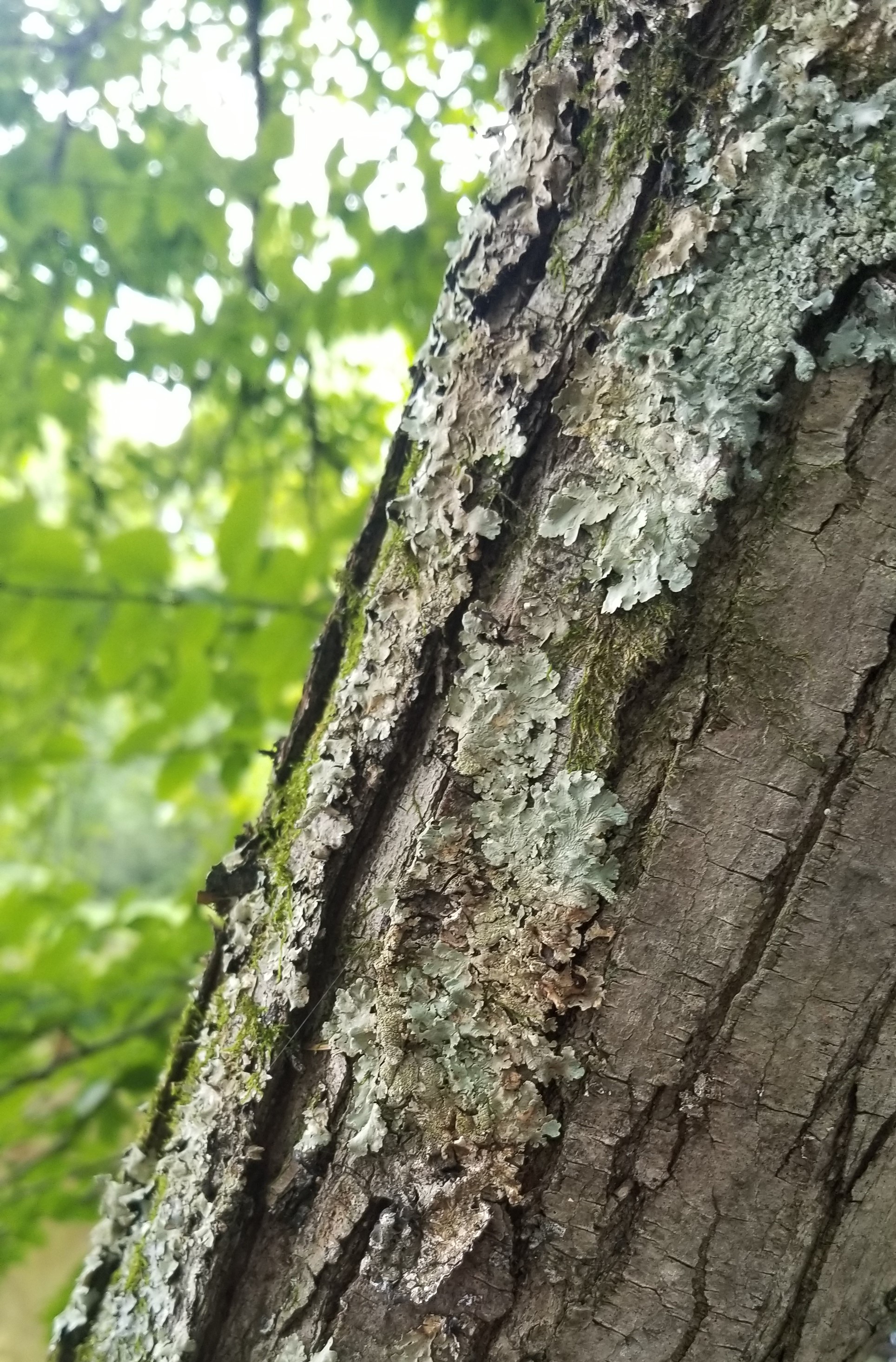
The lichen layperson may mistake them for moss, but the two are literally from entirely different kingdoms. Moss, for all its plush, pillowy, verdant beauty, is a simple plant. Lichen is so much more.
Lichen, in all its red, orange, blue, and/or green subtle glory, is not a plant. It’s not any one thing. Lichen is a deeply intertwined relationship (either parasitic or symbiotic, depending on who you ask) between a fungus and an independent unicellular photosynthetic organism, usually algae.
Lichen is also the pioneeriest of pioneer species – those intrepid organisms which initially inhabit new, or newly damaged or disrupted, ecosystems, places where nothing else can grow or thrive. Lichens can thrive in cold, heat, low moisture, radiation – even in space. They grown on barren rocks, but also flourish on man-made substrates – concrete, glass, and even metal.
Lichen grow in these barren landscapes, and by the simple act of existing, they make those desolate environments livable for others.
It’s hard not to romanticize the role of lichen in life – at least, that is, for me (obviously). But lichen isn’t noble. It isn’t anything, really, because there’s nothing within the fungus or the algae that can constitute anything approaching what we define as consciousness.
Obviously, I’ve thought about lichen too much. But recently, I’ve been stuck on the idea of lichen-as-metaphor. Lichen, by sheer dint of existing, make their world better. I don’t think that by default people do. I think it’s the opposite, that doing good or even just not doing bad requires conscious thought and effort.
And even the good that lichen (unintentionally, because it is entirely without intent) does, it can’t do it alone. Neither a fungus or an algae by itself could survive in the environments that lichens thrive in, but together they are pioneers. Either the fungus takes advantage of the algae, or it’s a mutually beneficial partnership (or likely, in reality, some complicated blend of the two), but they can only do it together.
I don’t know exactly what this post is about (other than lichen, obvs). It’s just something I’m thinking about. The idea of what it takes to leave your corner of the world an even slightly better place. The conscious effort, the intent, the action. The idea that whatever it is we’re trying to do, we can’t do it alone. We can’t do it by taking advantage of others, either (karmically, that would render the whole trying-to-make-the-world-a-better-place thing moot). But maybe, just maybe, there’s a mutually beneficial way to work on it.

 Better Living Through Self-Loathing